Advantages of Incorporating
Owners are protected from personal liability fro company debts and obligations.
Corporations have a reliable body of legal precedent to guide owners and managers.
Corporations are the best vehicle for eventual public companies.
Corporations can more easily raise capital through the sale of securities.
Corporations can easily transfer ownership through the transfer of securities.
Corporations can have an unlimited life.
Corporations can create tax benefits under certain circumstances, but note that C corporations may be subject to “double taxation” on profits. To avoid this, many business owners elect to operate their corporations under subchapter S of the Internal Code. Also known as an S corporation, this entity allows income to pass through to the individual shareholders.
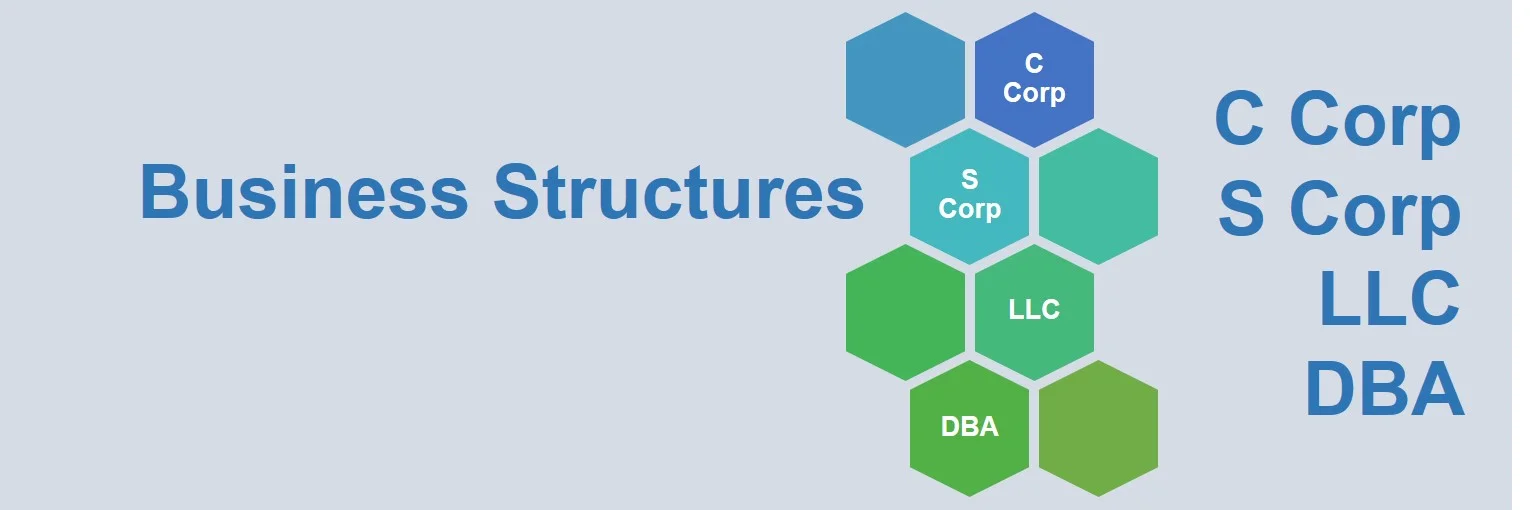
Understanding Corporation Types
Filing a DBA
A DBA filing (doing business as, also called an assumed or fictitious business name) allows a company to transact business using a different name. It generally takes place at the county level, but some states have state-level DBA filings. For sole proprietorships and general partnerships, unless a DBA is filed, the company name is the same as the owner’s or owners’ name(s). For example, John Smith is operating a landscaping business as a sole proprietorship. In order to transact business as Smith’s Landscaping, he must file a DBA for that name. Otherwise, he must transact business as John Smith.
A corporation or LLC can also file a DBA to transact business under a name different from the one registered with the state (when the business was incorporated). For example, a corporation formed as Smith and Sons, Inc. may want to do business under a name that more clearly states what the company does and could file a DBA to use a more descriptive name like Smith Landscaping.
Advantages & limitations
For sole proprietorships and general partnerships, the advantage of filing a DBA is that it does not provide the same ongoing compliance requirements of incorporating or forming an LLC. It merely allows the company to transact business with the new name. The limitation is that it does not provide the liability protection and tax advantages of incorporating.
A DBA filing does not change the official name of the corporation or LLC. It only allows the business to use a different name in trade, which can be in addition to or instead of the official corporate or LLC name.
Limited liability company (LLC)
Another business type that is formed under state law and gives you personal liability protection is the LLC. Tax-wise, an LLC is similar to an S corporation (or S corp), with business income and expenses reported on your personal tax return. If you are the only owner of an LLC, you are viewed as a “disregarded” entity. This means you report the LLC’s income and expenses on Schedule C of Form 1040─the same schedule used by sole proprietors.An LLC might be the right type of business for you if:
Your startup company anticipates losses for at least two years and you want to be able to pass the losses through to yourself and the other owners
Flexibility for accounting methods is desired, because LLCs are not required to use the accrual method of accounting as C corporations typically are
Your business may own real estate
You want management flexibility, since LLCs offer more flexibility than corporations in terms of how the management of the business is structured
You wish to minimize ongoing formalities; unlike corporations, which are required to hold annual meetings of directors and shareholders and keep detailed documents and records for all corporate meetings and major business decisions, LLCs do not face strict ongoing meeting and documentation requirements
You want flexibility for sharing profits among owners
C corporation
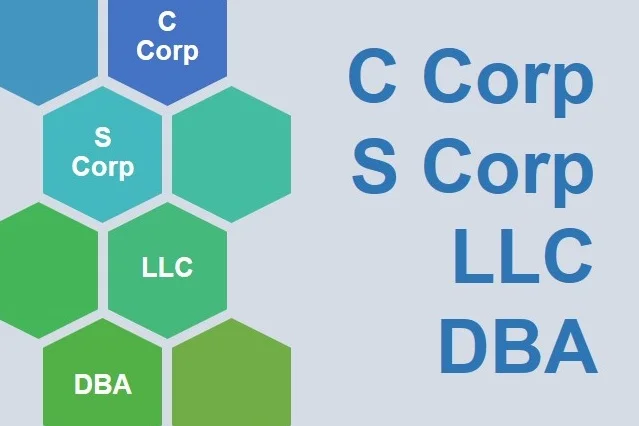
A corporation is a separate legal entity set up under state law that protects owner (shareholder) assets from creditor claims. Incorporating your business automatically makes you a regular, or “C” corporation. A C corporation (or C corp) is a separate taxpayer, with income and expenses taxed to the corporation and not owners. If corporate profits are then distributed to owners as dividends, owners must pay personal income tax on the distribution, creating “double taxation” (profits are taxed first at the corporate level and again at the personal level as dividends). Many small businesses do not opt for C corporations because of this tax feature.
A C corporation might be the right business type for you if you:
May need venture capital for financing
Want flexible profit-sharing among owners
Want company earnings to stay in your business so that it can grow
Want flexibility to spread the business earnings between the corporation and shareholders for tax-planning purposes
Want flexibility to set salaries for employees/owners to minimize Social Security and Medicare taxes
Want flexibility to provide (through the corporation) substantial health and medical benefits and other fringe benefit programs for things like education, life insurance, and transportation costs
Want to be able to easily sell your business
Want to provide an accountable plan for travel & entertainment
Want to be able to offer stock options to employees
Expect your business to own real estate
Prefer to lower your risk of IRS audit exposure, since there is a higher audit rate for business income that is reported solely on Schedule C of Form 1040 (U.S. Individual Income Tax Return)
S corporation
Once you’ve incorporated, you can elect S corporation status by filing a form with the IRS and with your state, if applicable, so that profits, losses and other tax items pass through the corporation to you and are reported on your personal tax return (the S corporation does not pay tax).
An S corporation might be the right business type for you if:
You want to take advantage of benefits that the corporate business type holds, but you want to take advantage of pass-through taxation
You want flexibility to set salaries for employee/owners to minimize Social Security and Medicare taxes
Flexibility of accounting methods is desired, because corporations must use the accrual method of accounting unless they are considered to be a small corporation (with gross receipts of $5,000,000 or less) and S corporations typically don’t have to use the accrual method unless they have inventory
Lower risk of IRS audit exposure is desired, because S corporations file an informational tax return (Form 1120 S U.S. Income Tax Return for an S Corporation) and there is a higher audit rate for business income that is reported solely on Schedule C of Form 1040 (U.S. Individual Income Tax Return)
Why Incorporate?
It is true that operating as a corporation has its share of drawbacks in certain situations. For example, as a business owner, you would be responsible for additional record keeping requirements and administrative details. More important, in some cases, operating as a corporation can create an additional tax burden. This is the last thing a business owner needs, especially in the early stages of operation.
Remember, aside from tax reasons, the most common motivation for incurring the cost of setting up a corporation is the recognition that the shareholder is not legally liable for the actions of the corporation. This is because the corporation has its own separate existence wholly apart from those who run it. However, let’s examine three other reasons why the corporation proves to be an attractive vehicle for carrying on a business.
Unlimited life. Unlike proprietorship’s and partnerships, the life of the corporation is not dependent on the life of a particular individual or individuals. It can continue indefinitely until it accomplishes its objective, merges with another business, or goes bankrupt. Unless stated otherwise, it could go on indefinitely.
Transferability of shares. It is always nice to know that the ownership interest you have in a business can be readily sold, transferred, or given away to another family member. The process of divesting yourself of ownership in proprietorship’s and partnerships can be cumbersome and costly. Property has to be retitled, new deeds drawn, and other administrative steps taken any time the slightest change of ownership occurs. With corporations, all of the individual owners’ rights and privileges are represented by the shares of stock they hold. The key to a quick and efficient transfer of ownership of the business is found on the back of each stock certificate, where there is usually a place indicated for the shareholder to endorse and sign over any shares that are to be sold or otherwise disposed of.
Ability to raise investment capital. It is usually much easier to attract new investors into a corporate entity because of limited liability and the easy transferability of shares. Shares of stock can be transferred directly to new investors, or when larger offerings to the public are involved, the services of brokerage firms and stock exchanges are called upon.
Related Services

domain name registration
SBP will help you finalize your domain name(s), set up your business email, and advise you on your new website.

startup business packages
SBP offers a suite of services to aspiring entrepreneurs looking to get their businesses off of the ground.

consulting
We’ll help you think more critically about your business, boost growth and operate more efficiently.

digital marketing
SBP will establish a multi-dimensional marketing strategy that will drive more traffic.
SBP takes you from dreamer, to doer
Contacting us is the best way to get your new business up and running and partnered with other businesses in the South Bay. Fill out the form below or give us a call to Incorporate your business.
Knowledge Portal